| Early-Stage Site Studies |
Evaluate a preliminary rack layout before a LiDAR topographic survey is available. |
Use Copernicus digital elevation models for early-stage terrain assessment and rack placement, then reassess the layout with survey-grade terrain when available. |
| Terrain-Aware Layout |
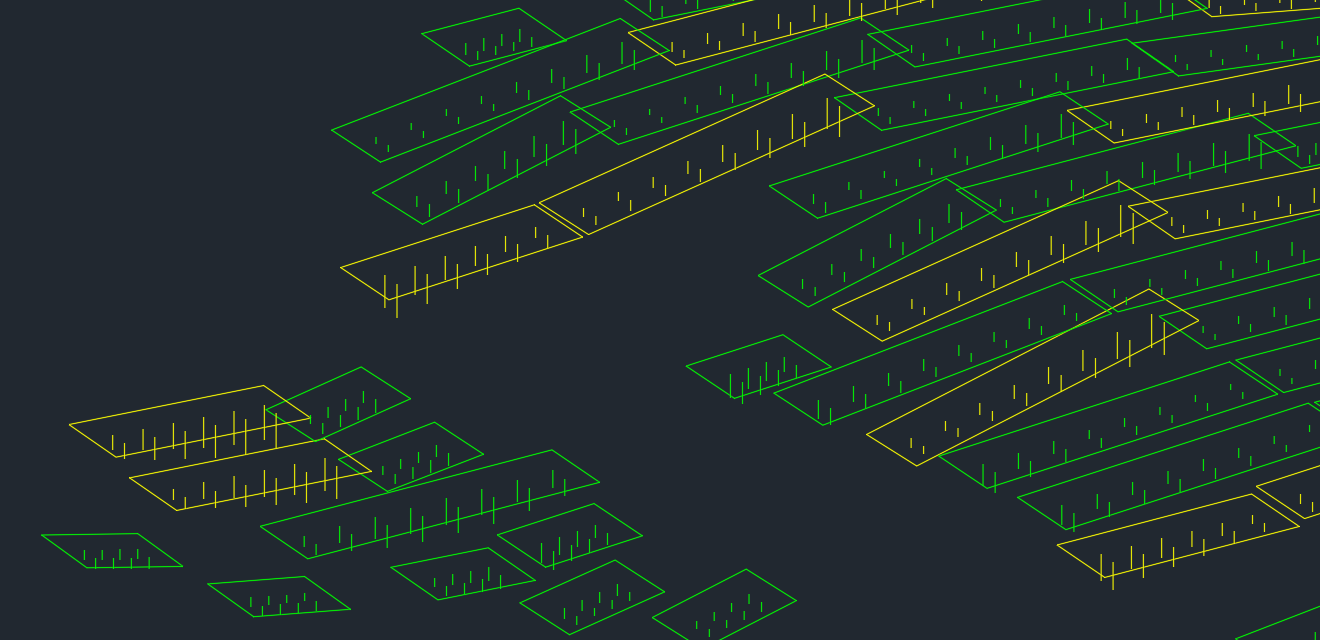
Fit racks to complex terrain without leaving slope, clearance and pile constraints until later. |
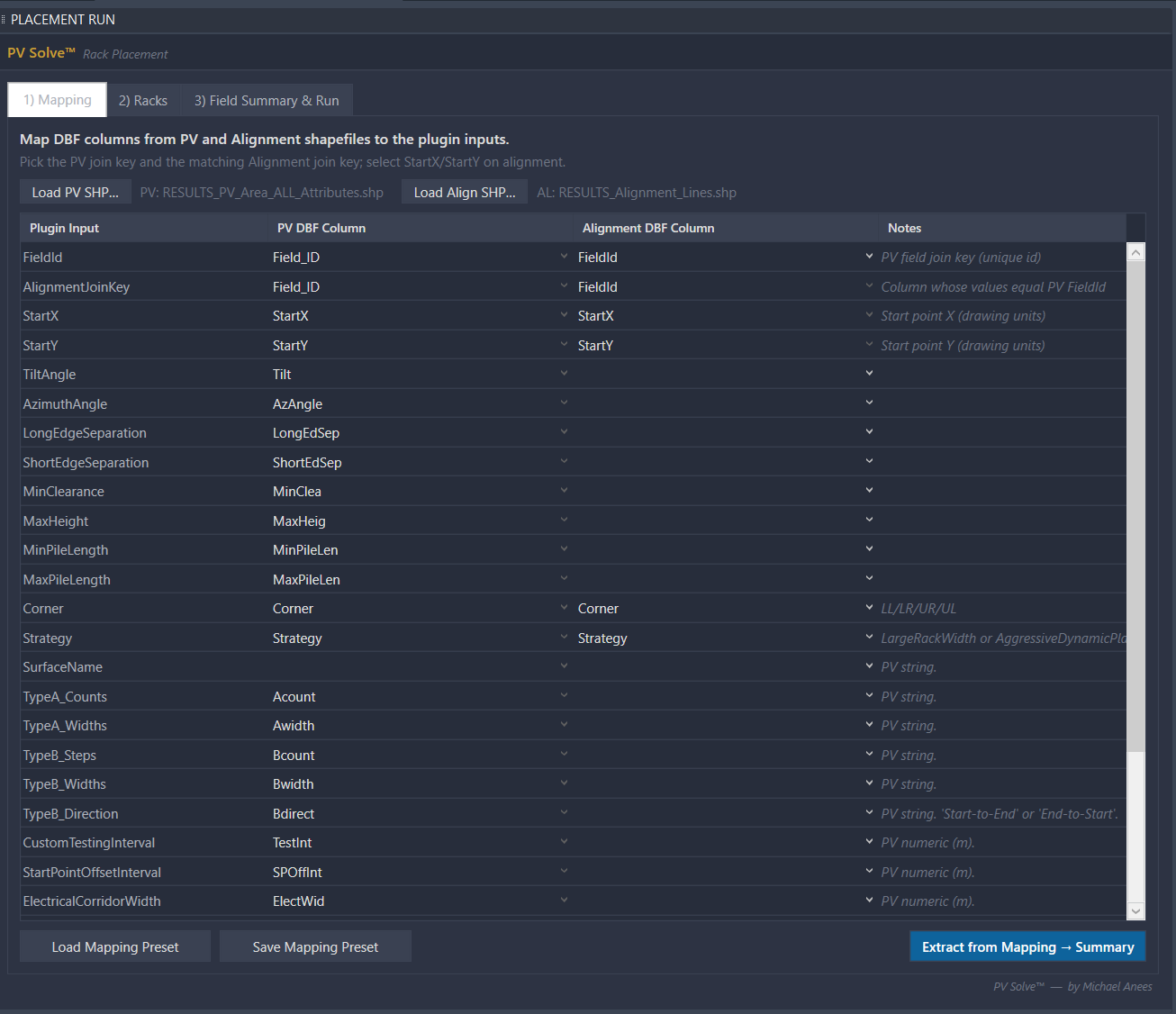
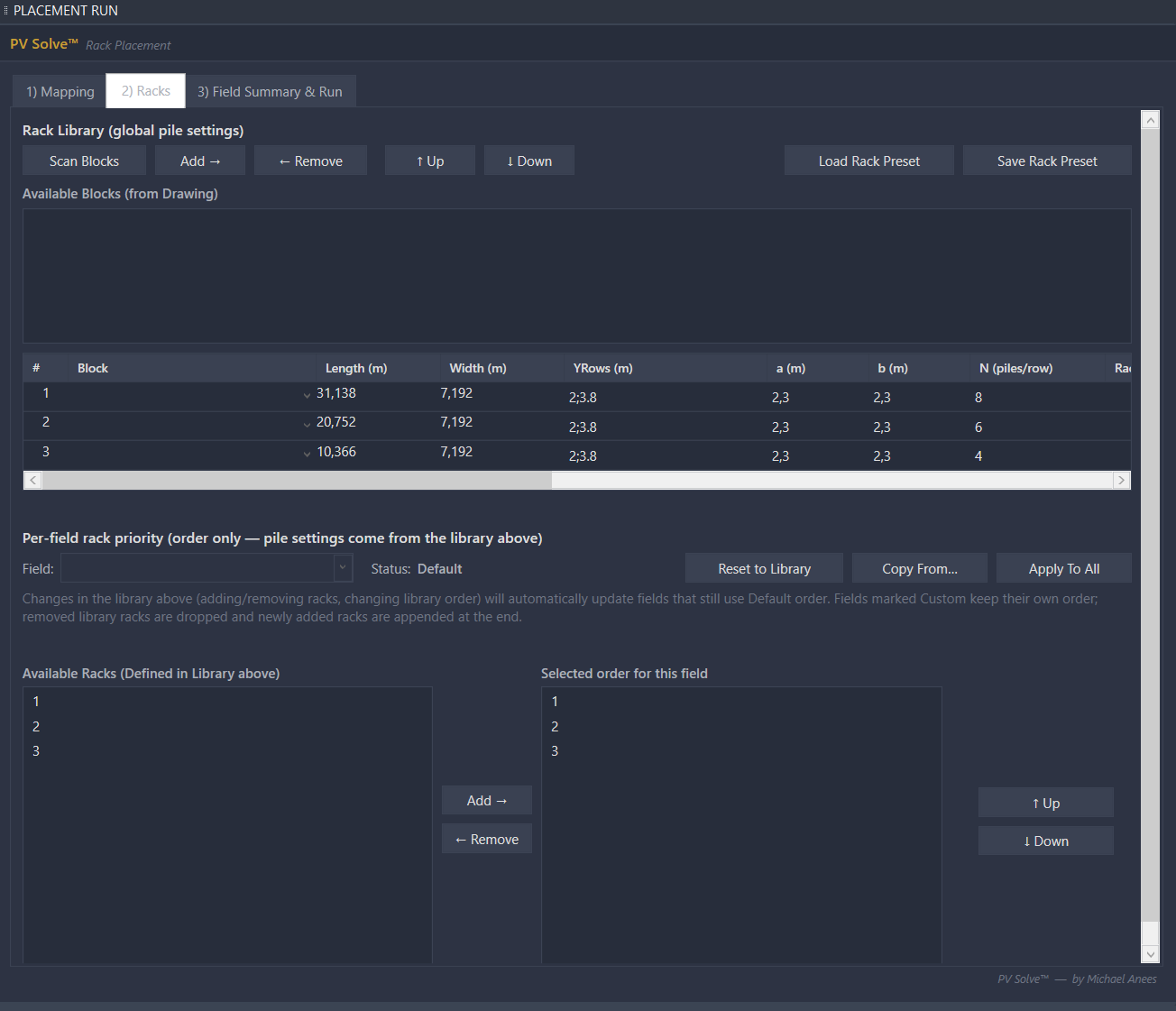
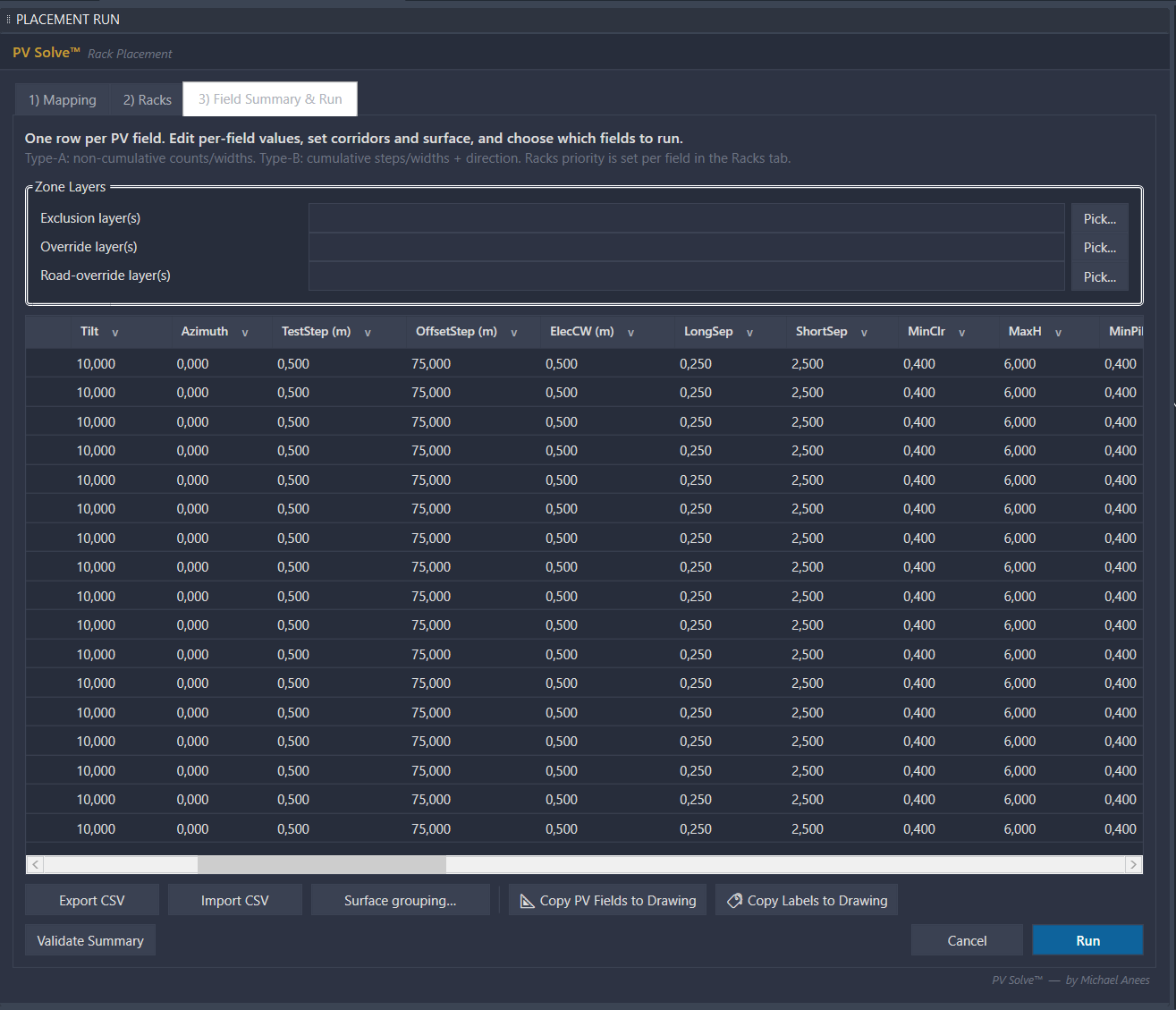
GPU-accelerated placement checks rack and pile geometry against configured limits, using 0.2m terrain data when a suitable LiDAR survey is available—read as a raster in AutoCAD or a TIN surface in Civil 3D. |
| DC Allocation & MPPT Grouping |
Coordinate shading compatibility, cable-length matching and inverter locations without repairing schedules manually. |
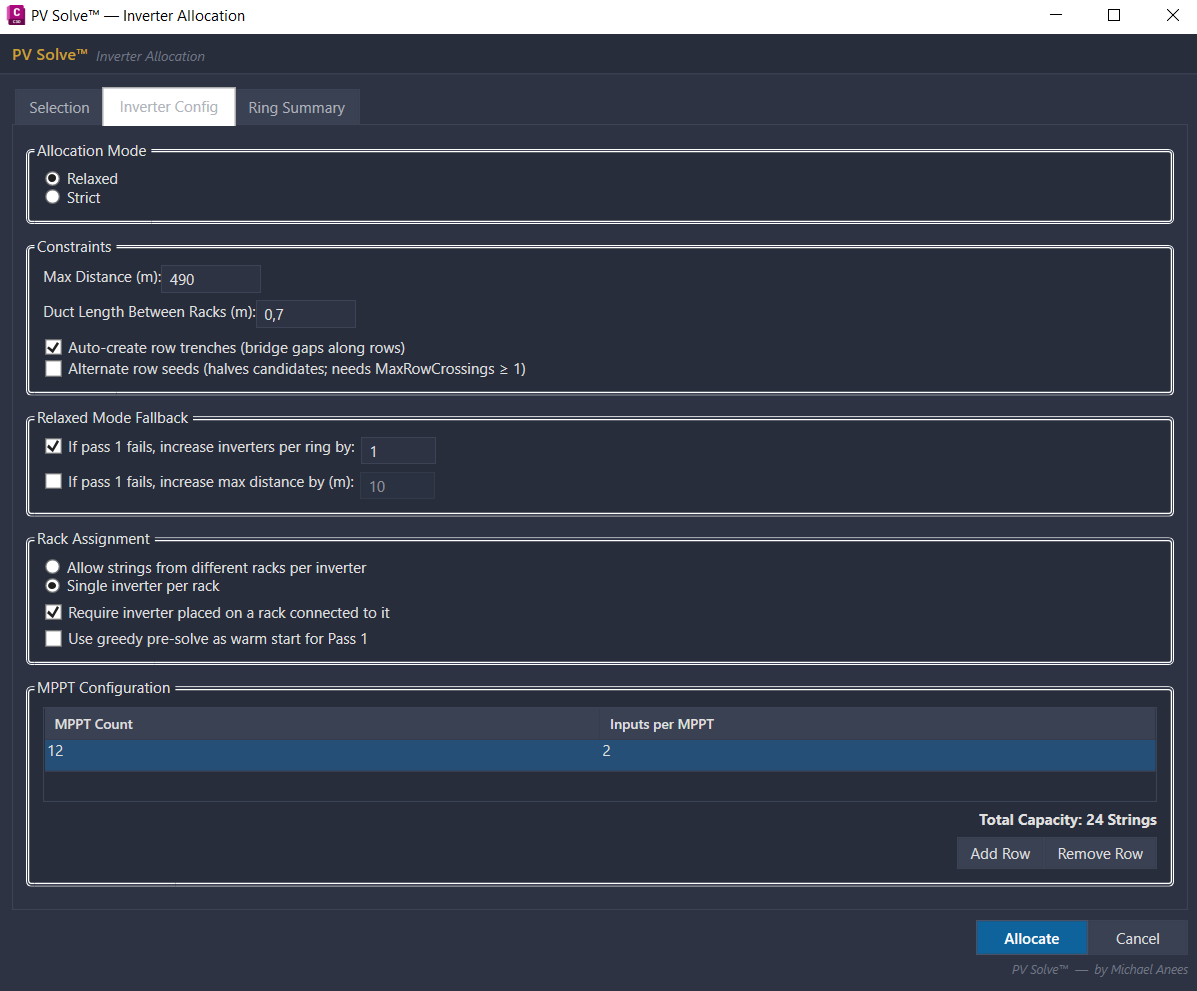
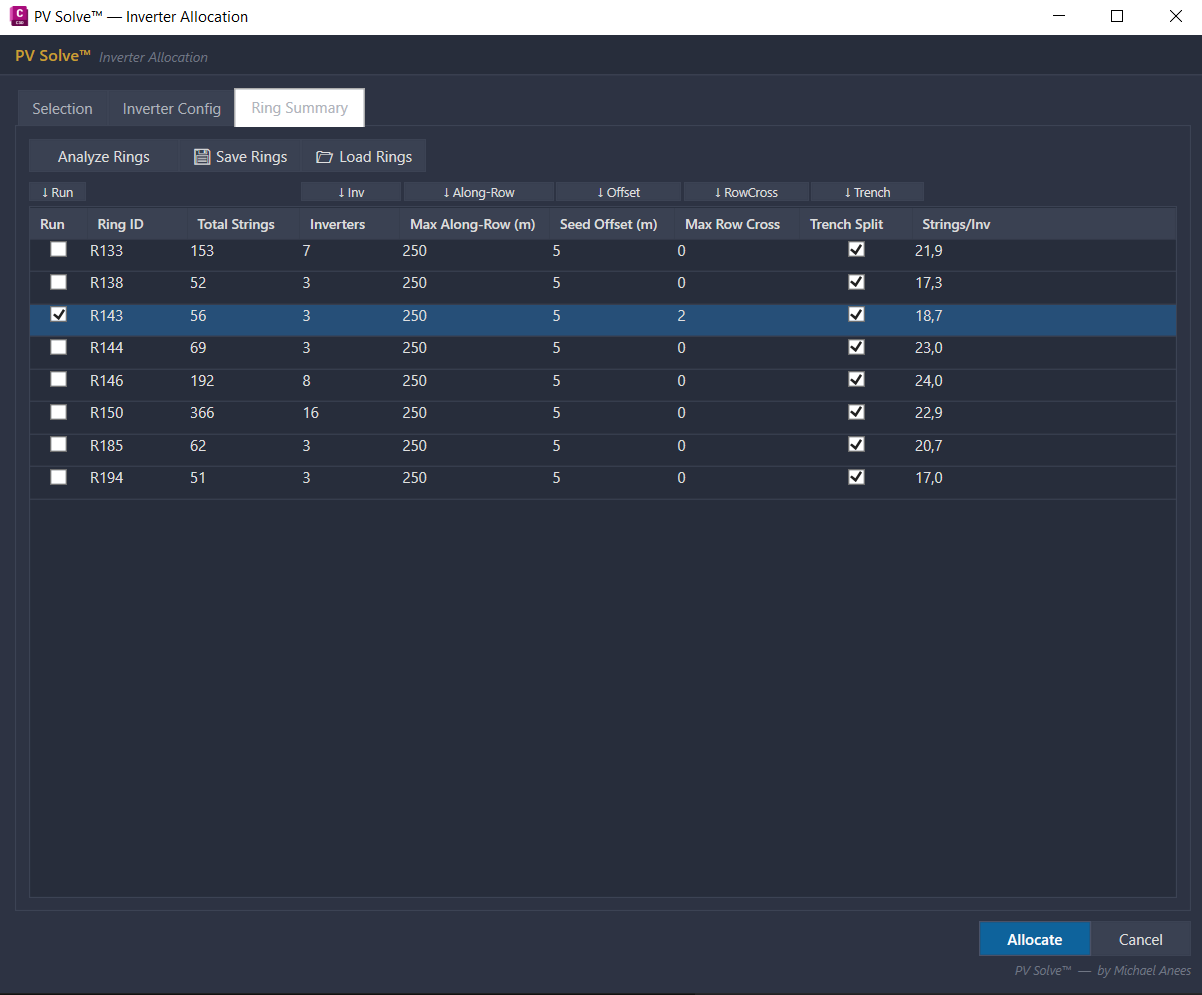
Google OR-Tools solves the field-wide string and MPPT allocation together with inverter-row selection, within configured constraints. |
| DC Design Revisions |
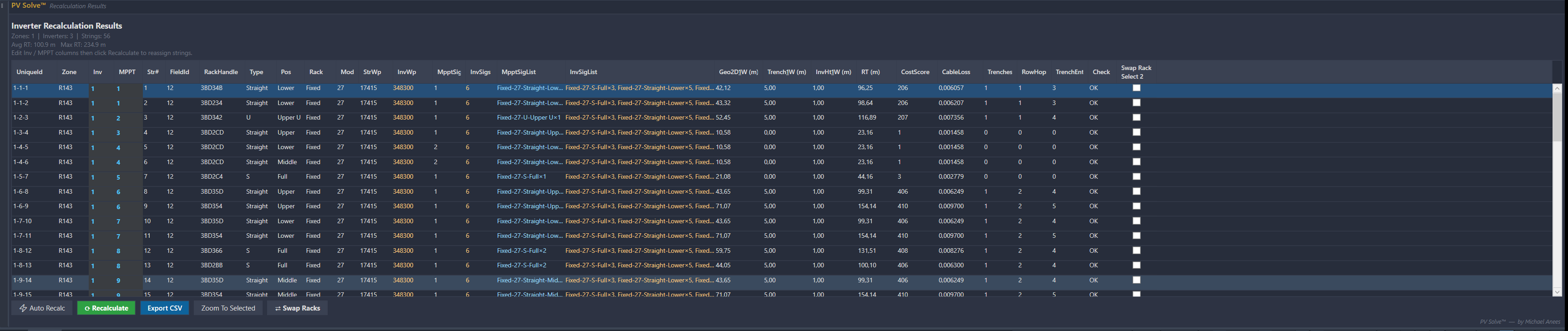
Understand the cable and loss impact when an inverter moves or string assignments change. |
Move inverter boxes or edit inverter/MPPT assignments, then recalculate routed lengths and losses without rebuilding the schedule by hand. |
| LV Connections & Loading |
Connect inverters through usable trenches while keeping transformer loading and cable performance visible. |
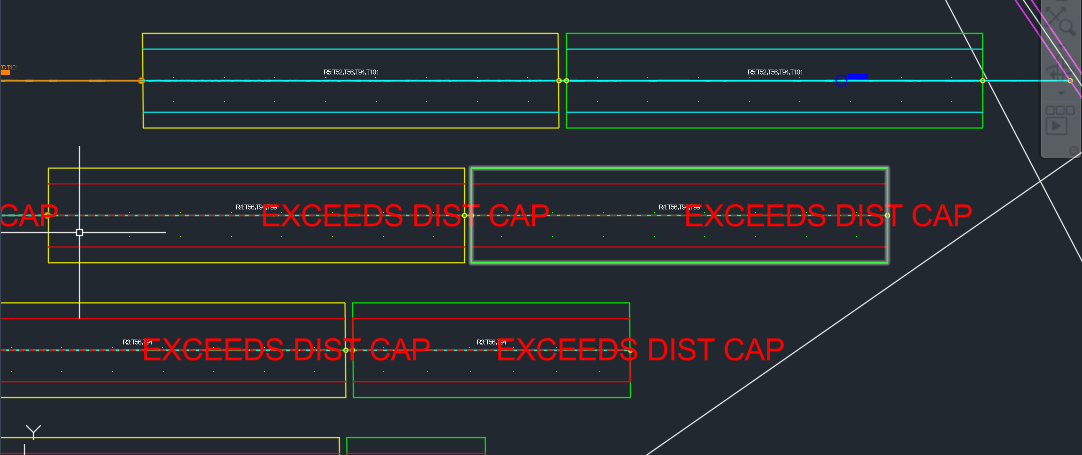
Assign and balance transformer inputs, flag capacity and connectivity issues, and calculate terrain-aware route lengths, resistive losses and voltage drop. |
| MV Circuit & Cable Design |
Choose circuit groupings and cable sizes when voltage drop, ampacity and shared-trench derating affect one another. |
GPU-powered combinatorial evaluation presents alternatives that satisfy configured checks, with circuit counts, 3D cable quantities, losses and voltage drop for comparison. |
| MV Corridor Changes |
Reassess the collection network when a late change restricts the permitted cable paths. |
Update the corridor network and re-solve to compare feasible circuit and cable alternatives, rather than reconstructing each arrangement manually. |
| Design Review & Handover |
Carry the selected design into review with inspectable routes, quantities and electrical results. |
Draw cable solutions in CAD, export electrical result tables, and deliver PVsyst geometry or the selected MV solution as GeoPackage through the relevant workflows. |